Synopsis
Series Introduction
This episode, which opens the original second season, serves as a continuation of the final episode of the previous season, Retake. As noted in the main article for Tsumihoroboshi-hen, the anime did not include the TIPS from the Visual Novel that reveal the true tragic ending.
As a departure from the first season, second-season episodes open with the title and the opening theme "Naraku no Hana." They close with the end titles and theme "Taishō a." Afterwards, a chibi Rika and Hanyū comically, and often salaciously, preview the next episode which often involves answering questions sent in from a certain Teppei. The title card for the next episode comes down with a crashing sound.
Spoilers: When They Cry Wiki tries to avoid spoilers as much as possible on the assumption that some may consult particular episodes or arcs after viewing or reading them. Obviously, When They Cry Wiki cannot help it if someone goes and reads an entire character page to learn that Mion is really Keiichi's twin brother, or that Shion searches for a half-human-half-dog demon even if he does not appreciate her cooking; however, the second series episodes start to strongly hint at things in a way that if fully explained will spoil the rest of the series and arcs.
When They Cry Wiki will still warn when, "Arg, Spoilers be there! Arg!" but it will be harder to avoid actual spoilage as the season progresses. Readers should completely watch the second series, play the Visual Novels, and/or read the manga before reading these descriptions if they do not want to encounter spoilers.
Arg!
First Half
An older Sawada and Akasaka Mamoru ride in a car together in the countryside. Akasaka complains that he cannot get a signal on his cellphone and asks to open the window. Sawada complains that it is hot outside but relents. As he sticks his head out of the window, Akasaka remarks, "Just as I remembered. The air here is wonderful."
 They arrive and look at an old and fade warning sign on chain-linked fence. As they drive through a gate, Akasaka remarks that it has nearly been thirty years. Sawada asks what he means, but Akasaka dismisses it. As they continue, Akasaka narrates his identity. He explains that he is a detective in the Tokyo Police Department. The car drives by ruined structures of Hinamizawa. Akasaka continues that he first came to the village in June, 1978. He points Sawada to their destination which is the now decrepit bus stop. He greets and asks how long it has been to Ōishi. As they reacquaint themselves, Akasaka continues his narration that, at the time of his first visit, he was employed by the National Police Agency Public Safety Division (NPA) to investigate the kidnapping of the Minister of Construction's grandson. Through his narration, Akasaka tells Ōishi that he has Yukie to be proud of.
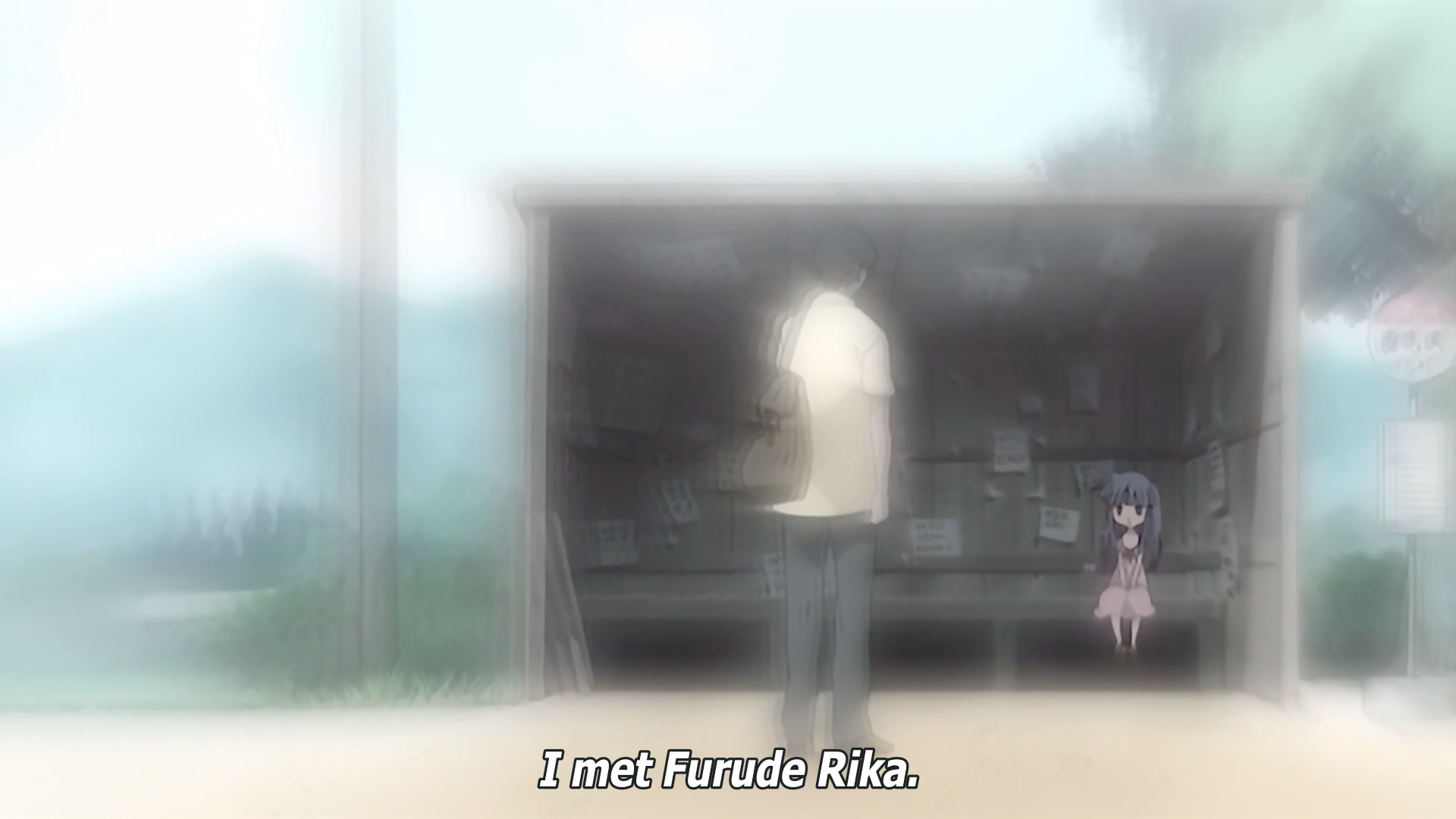 As they continue talking, Akasaka narrates that that was the first time he met Furude Rika in a flashback. In the flashback, he recalls her "Nipaa~!" Back in the present, both he and Ōishi look at the place Rika sat. Ōishi remarks that a lot has changed, while Akasaka observes that the village has been quarantined for a very long time. Sawada calls Akasaka, "senpai," and he introduces Sawada as his "kōhai" from college, who served in the Japanese Self-Defense Forces (SDF). Akasaka explains that Sawada was in charge of overseeing the quarantine of Hinamizawa. For this reason, Akasaka asked Sawada to be their guide.
When he is asked where they should start, Akasaka suggests the Onigafuchi Swamp. When they arrive, both are surprised to find it covered in concrete. Sawada explains that they filled it up after the Great Hinamizawa Disaster to prevent further leakage of toxic fumes. Akasaka jumps down to walk on the concrete and remarks that Internet theories suggest it was a UFO landing site: "Photos of this place show up frequently on websites dedicated to mysteries." As Sawada protests that the site was the origin of a sudden release of volcanic gas at the end of June, 1983, Akasaka continues his narrative over flashbacks of what happened. Military vehicles with personel in hazmat suits remove bodies as Akasaka explains that hydrogen sulfide mixed with carbon dioxide gas engulfed the village and killed everyone in a single night. After quarantine, the SDF stationed there filled the swamp.
Ōishi wonders about the swamp being a place to communicate with aliens. Akasaka notes that many Internet sites claim no scientific reason exists for pouring cement into the marsh. Akasaka quotes the Internet that, "the Great Hinamizawa Disaster" is nothing more than a government story to cover up a bio-terrorism attack by aliens.  Sawada finds that ridiculous, but Akasaka responds that some conspiracy buffs claim they have evidence: "A secret file labeled: File No. 34." Sawada asks about it, but Akasaka responds by asking to be taken to the next place.
They arrive at the remains of the Irie Clinic. Akasaka reminds Sawada of the File No. 34 he mentioned. He explains that it is a memorandum that was written by Takano Miyo, a nurse at the clinic. He reveals that the name "Miyo" comprise of the numbers 3 and 4 written together, and the title of the document comes from her name. He notes that Takano researched the history of the legends of demons in Hinamizawa. As they enter the clinic, Akasaka states that according to her studies, a UFO crashed in Hinamizawa and sank into the Onigafuchi Swamp.
 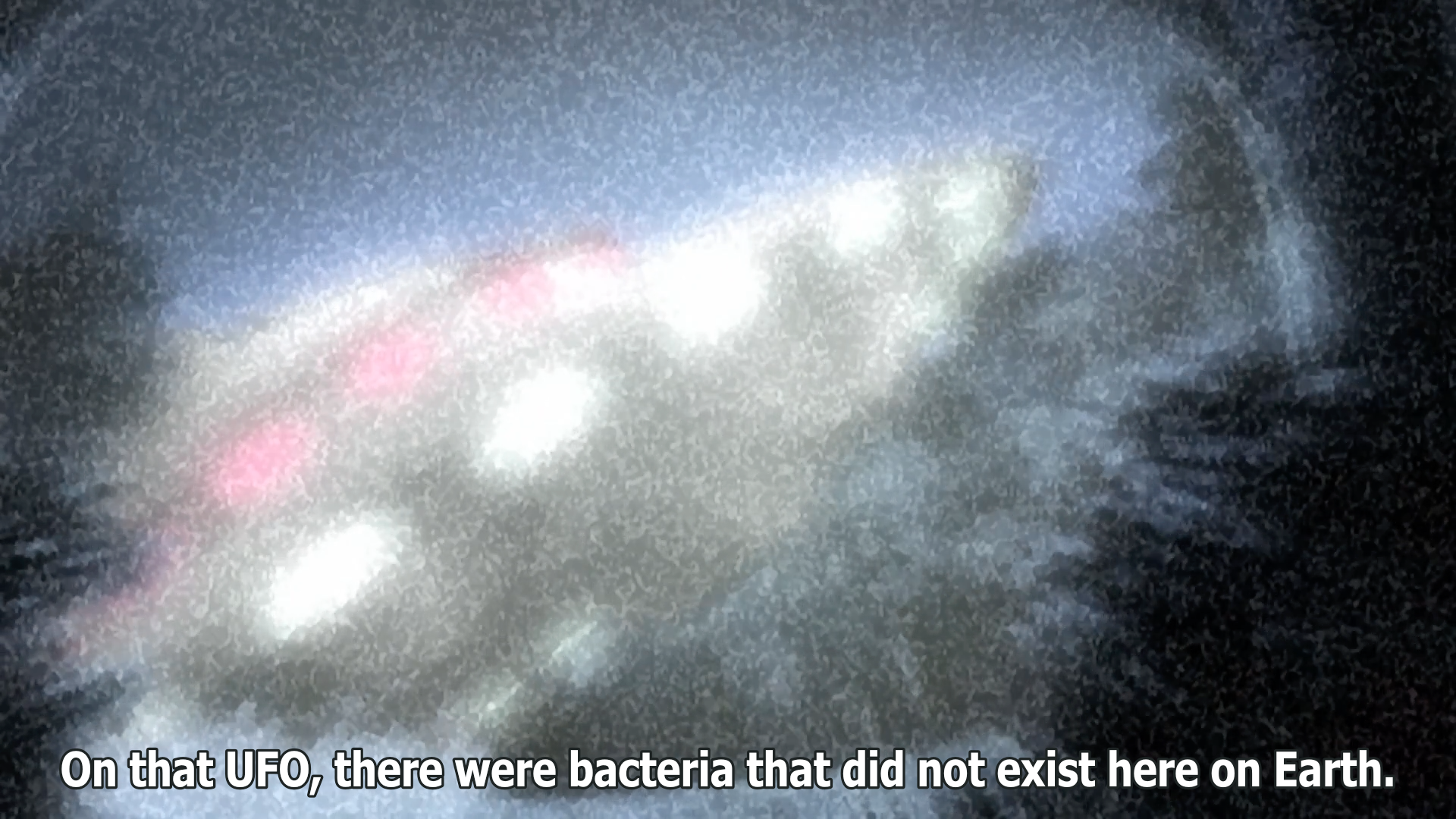 On the UFO were bacteria which infected the villagers. Those infected went insane and were called "demons." According to Takano, the origin of the legend of demons coming from the swamp were the aliens who realized the peril the villagers faced from the infection. They revealed themselves to the villagers, which was the advent of Oyashiro-sama.
 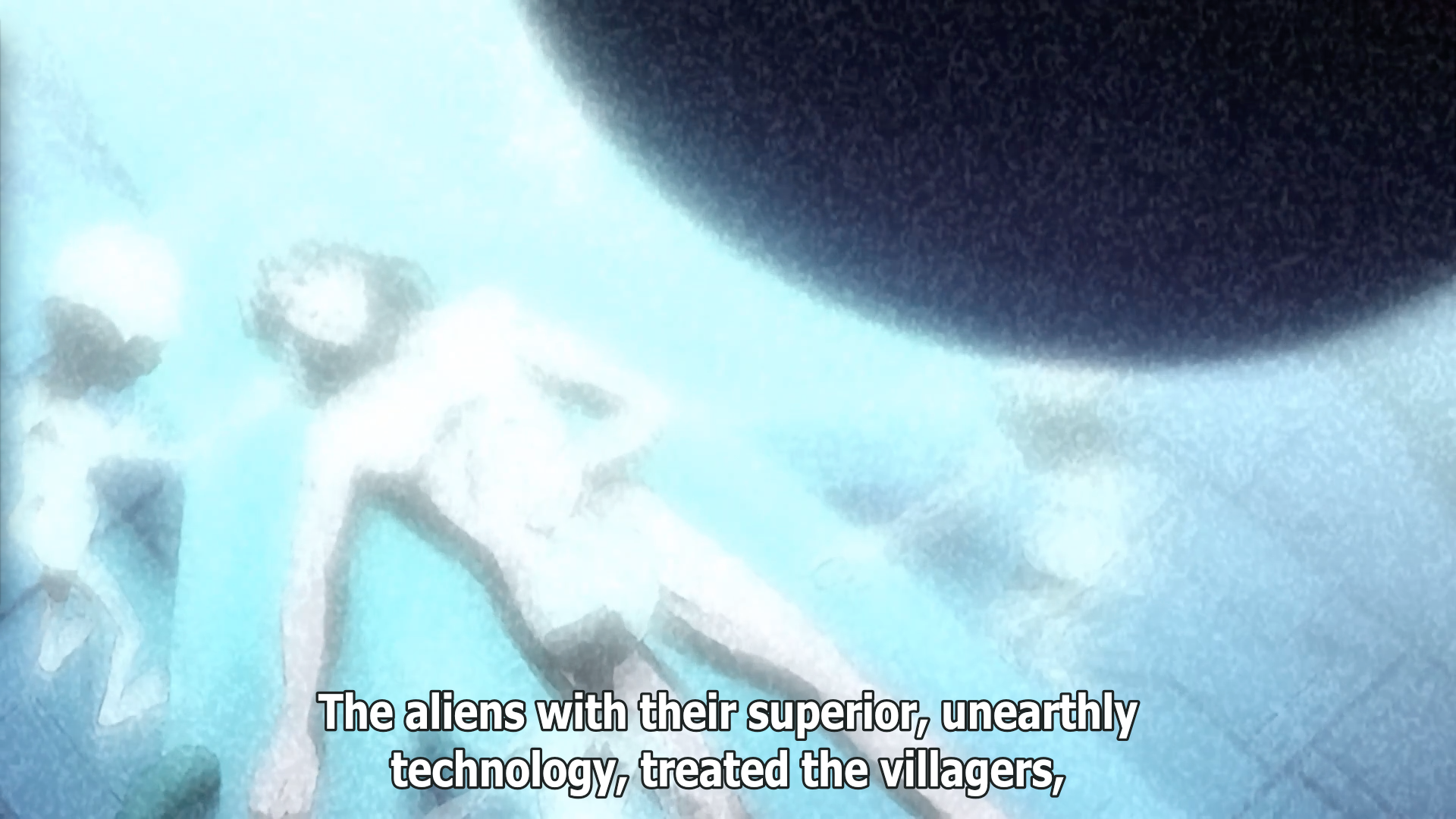 With their alien technology, they treated the villagers, but could not cure them of the infection. The villagers praised the aliens as Oyashiro-sama. The aliens used this influence to create rules to prevent the spread of this disease. Since the bacterium only thrived in the natural environment of Hinamizawa, should a host try to leave Hinamizawa, the symptoms of Hinamizawa Syndrome became more severe. The aliens therefore made the rule: do not leave the village.
Sawada asks how that relates to the Great Hinamizawa Disaster. Akasaka explains that the aliens, protected by the Three Great Houses of Hinamizawa, lived for several centuries: "They were worshipped as a holy relic in the Furude Shrine, passed down through the generations." Over time, villagers tolerated the bacteria, and the infection became largely harmless. Both the aliens and symptoms faded from memory. When Sawada concludes that peace returned to the village, Ōishi suggests that there must have been people who did not like this. Akasaka agrees that it was the Three Great Houses. He explains at the site of the Furude Shrine that with the backing of the aliens, the Three Great Houses dominated the village for centuries; however, in more recent times, the villagers who no longer needed the now powerless aliens, started to ignore the Great Houses.
Sawada asks what happened they stand outside the Sonozaki House. Akasaka explains over scenes of what appears to be a laboratory, that the three families began researching ways to restore the power of the bacteria. Sawada complains that his story resembles the plot of a bad movie. The scene focuses on a modern dissection table that has what appears to be old blood in the middle. Akasaka continues that in June 1983, Takano Miyo died under bizarre circumstances which remain unexplained. Further, as if she foresaw her death, she gave her scrapbooks to another person. He identifies that person as "Girl A."
Sawada recognizes "Girl A" as the one who barricaded Hinamizawa Branch School and took the students hostage. Ōishi is surprised that he knows of the case. Sawada explains that he heard of it while he was stationed in Hinamizawa. In a flashback to the incident, Akazaka describes how the girl raved about the Three Great Houses being involved in a bio-terrorism plot. The flashback confirms the identity of "Girl A" as Ryūgū Rena. The day after the incident at the school, the Great Hinamizawa Disaster occurred. Sawada wonders if that is a coincidence; Akasaka admits that he does not know. He notes that a number of inconsistencies remain: the filling of the swamp was pointless; the quarantine lasted far too long; and periodic blood tests of the SDF personnel stationed during the quarantine. Critics claim this was all human experimentation on the SDF to test the infectiousness of the disease. Sawada protests that he underwent such blood test which a "normal salaryman" would have. Akasaka agrees, and Sawada relaxes, but Ōishi raises "a more interesting story."
 He explains that some claim that no volcanic gas outbreak happened; the government released the gas. When Sawada asks for evidence, Akasaka notes a government report released regarding the gas. Hydrogen sulfide would have rusted the metal and damaged the environment; yet, no trace of that exists in Hinamizawa. This raises a severe doubt that a volcanic gas release happened.
Sawada asks his "senpai" if he believes such conspiracy theories as they walk through what appears to be a laboratory facility. Akasaka confesses that he cannot help thinking that some truth lies behind such stories.  Sawada still protests that he is surprised that Akasaka could believe in UFOs, and he reminds that the existence of File No. 34 "is dubious." As Sawada continues his protest, Akasaka opens a briefcase and produces three scrapbooks which he identifies as "File No. 34." Akasaka explains that Takano predicted the Great Hinamizawa Disaster. Ōishi confesses that, at the time, he thought it was all some story Takano made up; however, when he re-read her scrapbooks, there were too many points he could not laugh off: "Well, except for that alien part."
Akasaka announces Ōishi's Theory: in order to restore religious piety, the part about the Three Great Houses studying a pathogen may have been true, and the disaster resulted from a failed experiment. Ōishi explains that the pathogen they researched proved a failure. Rather than control the villagers, it became a lethal pathogen which destroyed the village overnight. While Sawada remains uncertain, Akasaka declares that the disaster was not just a gas release. He reminds that "Girl A" predicted a bio-terrorism attack just before the gas outbreak. Takano and other villagers suffered bizarre deaths. None of that, Akasaka argues, can be explained by a volcanic gas release. He asks Sawada to take him to the next place.
Second Half
 They drive over the bridge over the now dry river with the water wheel sitting in the bed to eventually arrive at the remains of the school, the site of the hostage incident. Akasaka announces that they have an "appointment" there. There is a woman with red hair waiting.
 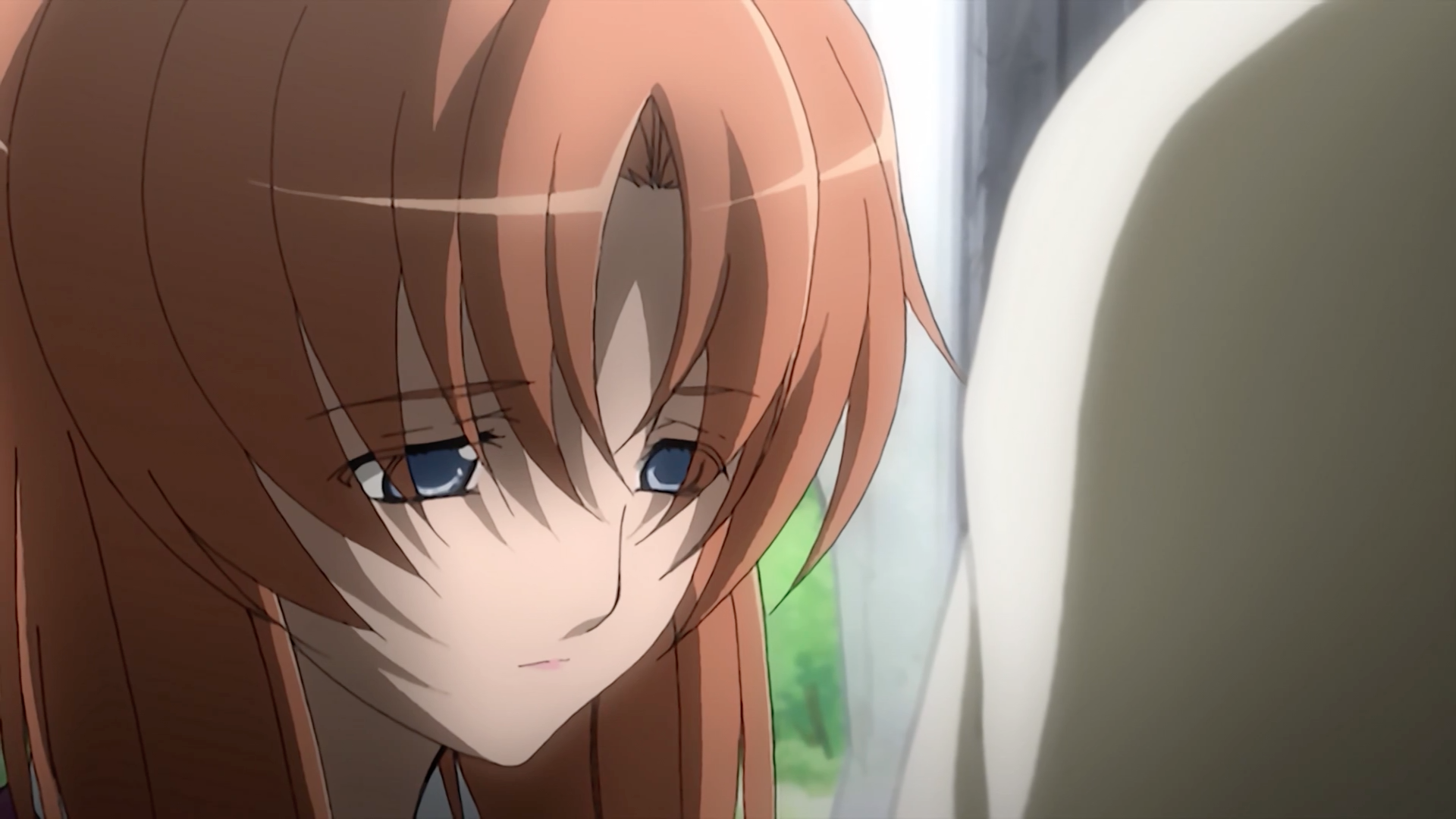 Ōishi greets her as Ryūgū Rena and asks her if she has been waiting long. She quietly replies that she just arrived sometime ago. Ōishi apologizes for bringing her back but explains that he wants to hear her story once again.
Almost whispering, Rena protests that she already told everything she knew to the police. Ōishi explains that as the officer in charge he knows this, but he confesses that at the time he did not ask about what Rena said was written in Takano's File No. 34. He specifically asks about Oyashiro-sama's Curse being a regional disease whose origin was the Three Great Houses, especially the Sonozaki. Rena slowly turns her head away from him as he speaks to look out the window. Rena asks why she believed in such a "stupid story" and then did "such an idiotic thing." She almost whispers again that she believes she must have been mentally unstable. She credits Maebara Keiichi for recognizing her instability, awakening her "from that nightmare," and everything "ending."
 Ōishi gently protests that he cannot believe that everything she said, "was a delusion or a bad dream." He reviews that Irie Kyōsuke committed suicide that night, and Rika was found murdered. Early, that following dawn, the disaster occurred that wiped out the village. He cannot believe that all of these events which occurred sequentially are mere coincidence. Rena continues to look out the window. Ōishi notes that after her incident she was hospitalized "for a long time." Rena reacts slightly. He suggests that she was convinced to think that is was all a delusion by the hospital. "It's okay," he consoles, "This is not the hospital." He asks her to tell them what she really knows and thinks.
Rena reacts slightly again, but she say nothing nor looks at Ōishi. More desperate, Ōishi reminds her of those who died, including Keiichi, Mion, Satoko, and Rika. Rena reacts more visibly by gritting her teeth. She then repeats that she does not know as her eyes widen and she starts to shake. She finally grabs her head, and Ōishi sighs.
After some time, Rena finally whispers that she cannot help thinking that some big secret surrounded Rika. She explains that Mion ("Mii-chan") was a part of the Great Houses, but she seemed to have nothing to do with aliens or bio-terrorism. However, she has no doubt that Rika was somehow involved and knew something.
 Rena, Ōishi, and Akasaka stand before her old abandoned van located in the dump. Rena explains, "She told me there." In a flashback, Rika holds a bright flashlight that stuns the young Rena in her van. In her Adult Voice, tells her not to be afraid.
  "I came to save you," she explains. Rika produces a case that holds a syringe and a small glass vial. As Rena fearfully recognizes what it is, Rika claims that it will make her "feel at ease." Rena refuses, and continuing in her Adult Voice, Rika wishes her luck since, "It's a doomed world anyway." She stands and declares to Rena that she has, "no more interest in this Hinamizawa. I'll go look for the next Hinamizawa." Rena stares back at her stunned.
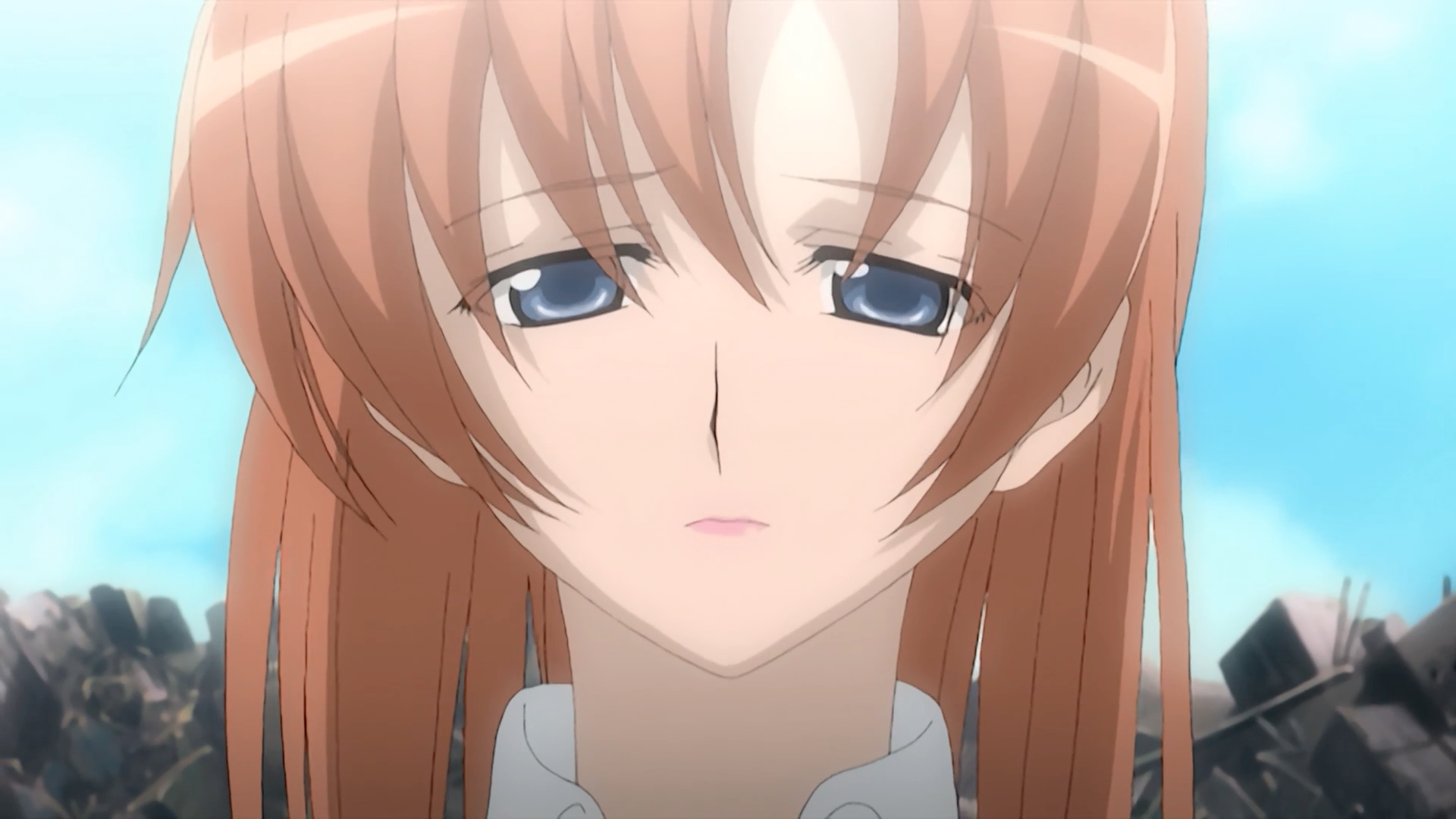 "A doomed world?" Ōishi's question brings Rena back to the present. Speaking again in a near-whisper, Rena looks down and explains that Rika was not the Rika she knew, "it was another Furude Rika." As the wind blows her hair, Rena explains that this "Rika-chan who wasn't the usual Rika-chan" would appear to them every now and then.
This shocks Akasaka, who flashes back to when Rika spoke to him in her Adult Voice. The scene immediately shifts to the of the Furude Shrine and the saisen-bako (offering box) at the top of the steps. Rena asks if this is where Rika was killed. As they look, Akasaka flashbacks to Rika, in her Adult Voice, announcing that on the same day or a few days after in June, 1983, she will be killed. She tells him, "I don't want to die." The flashback ends at the observation site where Akasaka had the conversation with Rika. Inwardly, he remembers what she told him there. He laments that, in the end, he failed to save her.
 Rena walks to the railing. She confesses that if she could, she would want to return to that Hinamizawa. To himself, Akasaka wonders what happened. A flashback depict Rena following Mion to school with Keiichi. Rena stops and excitedly waves to Satoko and Rika as they arrive at the school. Satoko suddenly rushes in the entrance, and Keiichi tries to "beat" her, only to fall into one of her traps. Rena, in the flashback, smiles and laughs. Mion laughs. Keiichi rages. Satoko winks. Rika gives a "Nipaa~!" smile.
With the sound of metal cutting, Rika's evicerated body surrounded by feeding crows appears. Rika's declaration that she has "no more interest in this Hinamizawa," and she will look for the "next Hinamizawa" is heard.
Teaser
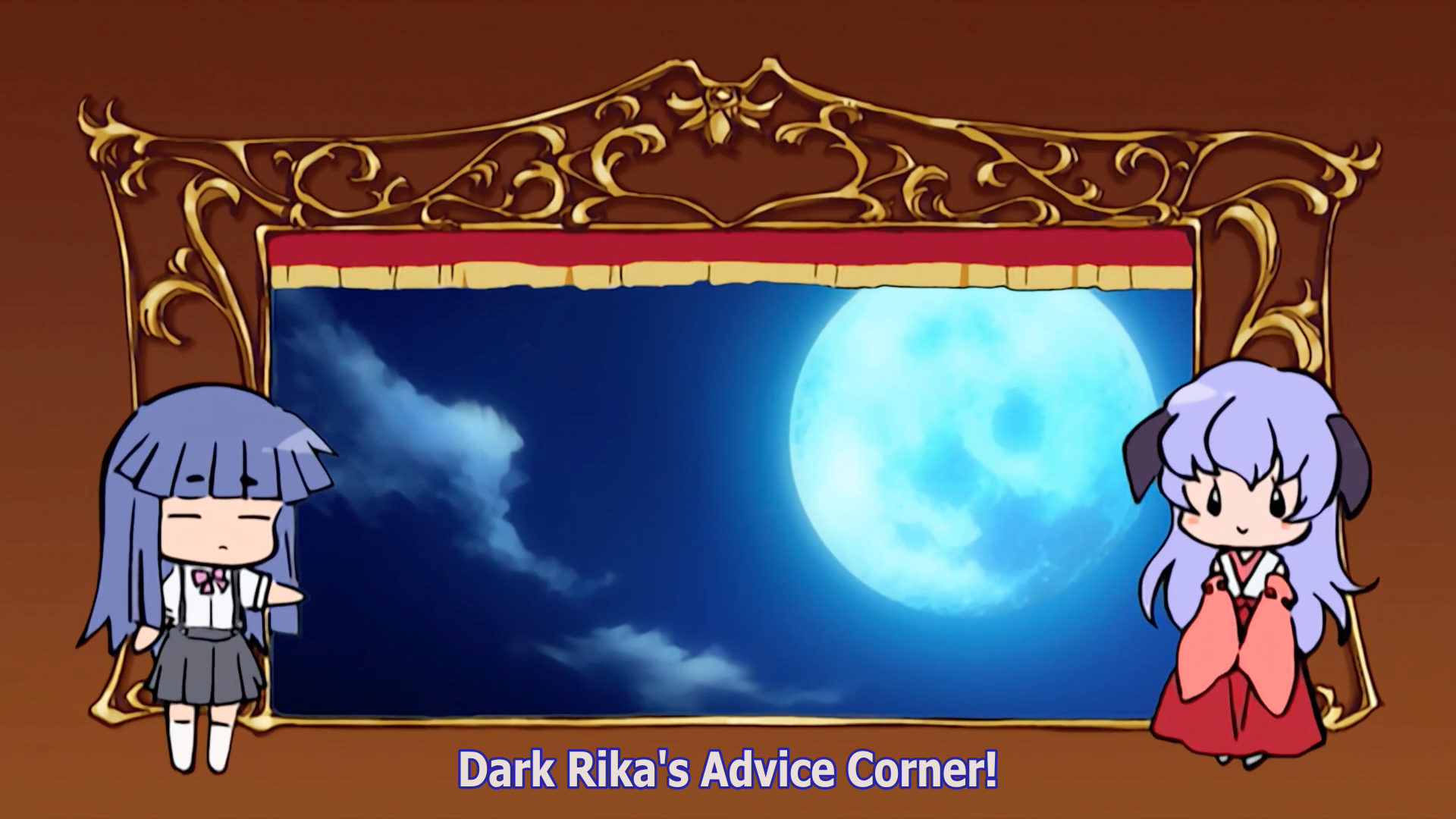 Chibi Hanyū announces the first installment of "Dark Rika's Advice Corner." Over scenes from the next episode, Chibi Hanyū reads the first question from "Hōjō Teppei-san in Hinamizawa!":
- Chibi Rika (Adult Voice): "What's the problem?"
- Chibi Hanyū: "'Maybe it's because my hair's been getting thinner, but for some reason my punch perm hasn't been holding well recently. What should I do?'"
- Chibi Rika (Adult Voice): [Laughs] "Perhaps he should just transplant his hair from 'down there?'"
- Chibi Hanyū: "Hauu~! Really?!"
- Chibi Rika (Adult Voice): "I'm lying."
Chibi Hanyū "Hauu~"s again then introduces the title of the next episode.
- Chibi Rika (Adult Voice): "Until it grows again."
Chibi Rika puns on "until we meet again."
Characters
In order of appearance
- Sawada
- Akasaka Mamoru
- Ōishi Kuraudo
- Inukai Toshiki (mentioned)
- Akasaka Yukie (mentioned)
- Furude Rika (flashback)
- Takano Miyo (mentioned)
- Oyashiro-sama (mentioned)
- Ryūgū Rena
- Maebara Keiichi (mentioned/flashback))
- Irie Kyōsuke (mentioned)
- Sonozaki Mion (mentioned/flashback))
- Hōjō Satoko (mentioned/flashback))
- Tomita Daiki (flashback)
- Okamura Suguru (flashback)
Referbacks
- As noted, this covers the TIPS of the Sound Novel not depicted in Retake.
- For most of the season, the opening titles end with Rika following Mion, Keiichi, Shion, Satoko, and Rena over a bridge on the way to school. She turns and appears to wave at the viewer.
- Akasaka first appeared in the episode Hinamizawa of Himatsubushi-hen. He encountered Rika at the bus stop.
- Covering a marsh with concrete will not cease the potential leakage of volcanic fumes, as Akasaka notes.
- Akasaka gives one of the theories about what happened in Hinamizawa which Rena believed.
- File No. 34.
- Miyo and 34: "Mi" (三・3) and "Yo" (四・4) and Major Spoilers for the rest of the season be there. Arg.
- While the transition is odd, it appears that Akasaka mentions the Sonozaki home at the Irie Clinic, then they explore the laboratory underneath the clinic.
- Second arc where Irie commits suicide.
- Rena's believe that Mion had nothing to do with "aliens or bio-terrorism."
- The flashback with Rika is through Rena's perception, just as the events of Onikakushi-hen are through Keiichi's.
- Syringes: why Rika has one. While not depicted, she previously tried to inject Shion, who was dressed as Mion, in the first episode of the Question Arc Watanagashi-hen. This is revealed in the episode Cold Hands of its Answer Arc Meakashi-hen.
- Doomed World: why Rika would say that. Arg. Major Spoilers be there. Arg. Why she states she has no more interest in "this" Hinamizawa and will look for the "next" Hinamizawa. Arg. Spoilers.
- "Other" Rika: Rena reveals that she and the rest of the friends noticed Rika occasionally speaking in her Adult Voice and behaving very differently. Arg. Spoilers. Rika warned Akasaka in her Adult Voice in Himatsubushi-hen.
Trivia
- The NPA is often described as the Japanese equivalent to the American FBI though there are significant differences.
- The manga adaption of Tsumihoroboshi-hen introduces this ending by having Rika admonish the reader: "Oh my. You've gone and turned the page."
Cultural References
- Japan does not identify juveniles by name in legal matters.
- 'Salaryman' (サラリーマン・Sararīman)
- '賽銭箱' (Saisen): offering box at Japanese shrines.
Memorable Moments
- The Alien Theory
- Rena as an adult
- Rena's flashback of Rika presenting her with a syringe to "save her."
Quotes
- "Why did I believe in that stupid story and do such an idiotic thing? I believe that I must have been mentally unstable." – Rena
- "I just . . . can't help but think that there was some big secret surrounding Rika-chan." – Rena
- "I came to save you." – Rika in her Adult Voice to Rena
- "The person who was there was not the Rika-chan I knew. It was another Furude Rika." – Rena
Gallery


30 Years Later


Keiichi encounters one in Rena's memory.