{{Template:Arc Box 2}}Higurashi no Naku Koro ni Gō (ひぐらしのなく頃に業, When the Cicadas Cry: Karma) is the fifth anime series to the Higurashi no Naku Koro ni franchise. The series started airing from October 1, 2020 to March 21, 2021, 7 years after the previous OVA adaptation and 13 years after the last anime series of the Higurashi no Naku Koro ni franchise. Initially teased as a remake of the first anime series, the airing of the second episode on October 8 revealed that the anime has a brand new story, featuring Onidamashi-hen as its first arc.
It is followed by the fourth season Higurashi no Naku Koro ni Sotsu (ひぐらしのなく頃に卒, When the Cicadas Cry: Graduation).
Before being revealed as a new series to the franchise, it took the title "Higurashi: When They Cry - New" in English speaking territories, before being replaced by "Higurashi: When They Cry - Gou" as the second episode aired.
Production
Originally planned to be aired on August 21, 2020, the series premiere had to be delayed to October 1, due to the COVID-19 pandemic. Unlike previous animations, Higurashi no Naku Koro ni Gō is being animated by Studio Passione, instead of Studio DEEN. The anime has the same voice actors and original soundtrack as the first season, but with improved animation and character redesign by Watanabe Akio and Kawaguchi Keiichiro as the director. Like always, Ryukishi07 is providing the script to the series.
The idea of a new Higurashi series started after the release of the final OVAs and the remaster upscale of the original anime series done for the anime series' 10th anniversary. In 2017, the producer of Gō and Sotsu, Okamuta Takema, talked to Ryukishi07 about the remasters. Ryukishi07 stated an opinion, saying how he'd love to remake the first few Higurashi arcs instead of having them only remastered. Upon hearing this, Okamura Takema decides to consult a familiar acquaintance of his who worked in an animation studio Infinite, Takayuki Nagatani.
Hearing their proposal about a remake of the first series, Takayuki tells Okamura to "take the idea and approach it in a different direction", since the animation studio that they proposed the idea to insisted on not doing remakes for shows, but rather creating original new content instead. Okamura consults Ryukishi07 about Takayuki's proposal, until they come up with an idea for a series that looks like a remake, but as it goes on, it takes on a completely unfamiliar turn. In the span of one month, Ryukishi07 wrote the entire script for both Gō and its sequel Sotsu. The script was 2~3 centimetres in length when printed out. Upon proposing the script to Takayuki and Okamura, the production committee for the new anime began assembling. Infinity was in charge of management, Passione was in charge of animating, and KADOKAWA was in charge of advertising.
According to Ryukishi07, who wrote and supervised the scenario and storyboards, he was pleased to see the animation committee understanding the "feel" of Higurashi, leading to fewer revisions in the scenarion/storyboards than expected. In an attempt to keep the "feel" of Higurashi present at all times during the animation process, the producer Okamura advised the animation committee not to worry about any "restrictions" or "censorships" needed in order to broadcast the show, stating to them that any changes regarding gore or similar elements can be taken care of later.
As the anime was slowly getting completed, production manager Takayuki heavily advised the advertising committee to be careful, so that the new work is passed by as a "remake" of the series, and in his own words, "to keep the new Hinamizawa hidden". Despite the idea of misleading the audience receiving positive reception, Takayuki has reflected that the team shouldn't have maybe been so 'rough' with it.
The production committee also expressed concerns during the making of the four new arcs, mostly regarding foreshadowing. They didn't want the viewers to be able to solve the mystery of the new Hinamizawa so quickly. This was incredibly challenging in Tataridamashi-hen as what actually goes on in that chapter is completely different from Keiichi and Satoko's perspective.
The original voice actors and actresses for the series returned and had to record new lines every week without fully knowing the entire context of the scenes or be given any clues regarding the new "Gō" and "Sotsu" instalments. There was a small exception to this with Mika Kanai, Hōjō Satoko's voice actress, who was told in advance that Satoko would be getting major character development in this new instalment of Higurashi. Apart from knowing that, she didn't know much about the series herself. During recording for the series, there were times where Sotsu episodes were voice acted first and then the Gō episodes, leading the cast to be confused at some points during recording regarding consistency and familiarity. The voice directors, who had to hide spoilers from them, had trouble explaining the scenes to them.
The animators also had to make small details so that it's clear to viewer that the show takes place in the Showa era of Japan. However, this has caused some confusing with younger animators, who have claimed to have spotted and fixed "animation errors" during the production of the show, which weren't actually animation errors at all, but just how things worked and looked like in the Showa era of Japan. These "corrections" and call-outs done by younger animations often surprised older ones.
Broadcast
The anime aired on Tokyo MX, BS11, and TV Tokyo from October 1, 2020 until March 21, 2020 at 23:30 (11:30PM). As the series was broadcast to TV, there were official free livestreams of the anime available on NicoNico. During the livestreams, however, the viewer couldn't disable danmaku, meaning that the livestream's chat was always shown on the screen.
The TV broadcast also featured light censoring of gore scenes, only seemingly present in Onidamashi-hen. Flashbacks and or scenes that appeared in Gō uncensored have been heavily censored in the TV broadcast of Sotsu. All uncensored scenes can be found in DVD and or Blu-ray footages of Gō.
Funimation, now Crunchyroll, released official English subtitles for the series. Official Mandarin Chinese (simplified and traditional), as well as traditional Cantonese, and another English translation were released on Ani-One's Youtube channel for free only for IPs located in Asia. Though, they were removed sometime in late 2021.
Episodes
Onidamashi-hen
Watadamashi-hen
Tataridamashi-hen
- Tataridamashi-hen Part 1
- Tataridamashi-hen Part 2
- Tataridamashi-hen Part 3
- Tataridamashi-hen Part 4
- Tataridamashi-hen Part 5
Nekodamashi-hen
Satokowashi-hen
- Satokowashi-hen Part 1
- Satokowashi-hen Part 2
- Satokowashi-hen Part 3
- Satokowashi-hen Part 4
- Satokowashi-hen Part 5
- Satokowashi-hen Part 6
- Satokowashi-hen Part 7
Home Video Releases
The series has gotten DVD and Blu-ray releases for home video from February 24, 2020 until June 30, 2021. The DVD and Blu-rays could be bought in a regular pack (featuring just the episodes) or in DVD/BD-Boxes were extra bonuses were received such as a storyboard booklet, booklet with character designs/scenery designs/story designs and drafts, and extra tapestry varying from where it was obtained. A Rika Furude figurine was bundled with the first DVD/BD-Box.
The Home Video releases also fix animation in certain scenes, mostly fixing animation errors, minor scenes where the art-style seems a bit off, and color correction.
- Volume 01 Blu-ray/DVD featuring Onidamashi-hen was released on February 24, 2021.
- Volume 02 Blu-ray/DVD featuring Watadamashi-hen was released on March 24, 2021.
- Volume 03 Blu-ray/DVD featuring Tataridamashi-hen was released on April 28, 2021.
- Volume 04 Blu-ray/DVD featuring Nekodamashi-hen was released on May 26, 2021.
- Volume 05 Blu-ray/DVD featuring Satokowashi-hen was released on June 30, 2021.
- On the DVD release, Satokowashi-hen is split into two discs.
An exclusive home video release of the series was made by Tsutaya Discas. The Tsutaya Discas release has a different cover and disc design compared to the original home video release and it's exclusively available only in the DVD format. This home video release is a bit different since it can only be rented for a specific amount of time. The Tsutaya Discas release also splits Satokowashi-hen in two different releases, marking them as "Part five" and "Part six" respectively.


Music
The first episode had no opening. For the ending song, Eiko Shimamiya's "Higurashi no Naku Koro ni" was used, which also served as the opening for the first anime season. On October 8, Episode 2 aired and the new opening and ending songs were revealed. The series' opening song is "I believe is what you said" by Asaka, while the ending theme's are "God's Syndrome" and "Irregular Entropy" by Ayane.
During production of the show, Junko Hirotani was planned to sing the opening and ending themes, but due to her passing away in early 2020 before any production regarding the musical scene in the new series started, she had to be replaced.
Opening Titles
There are actually two versions where in the second an obscure figure is revealed in Episode 21. The scenes are created as if filmed on a hand camera with flaws and shaking. The scenes are:
- Quick flashes of Satoshi's bat in his locker, Rena's axe lying on corrugated metal in the dump, Mion's airsoft gun on a shelf with gun oil nearby, Shion's taser on a windowsill, and a small stuffed bear sits on one of the classroom's desks.
- Keiichi stands dramatically in the wind outside the school with Satoshi's bat.
- Rena stands, also dramatically in the wind, in the dump with her axe.
- Shion and Mion sit on a table in a traditional room back to back with dejected expressions. Shion holds her taser, and Mion holds her airsoft gun.
- Rika and Satoko stand alone in the classroom with their backs turned to one another.
- A murder of crows take flight.
- A flower has fallen on the table that holds the vase.
- Oyashiro-sama's statue in the Saiguden with both hands intact.
- In a decorative basin, water flows down into it, but the flow is depicted as if the "film" moves forward, then in reverse.
- A probable older Satoko pulls off her uniform tie from her shirt.
- Hanyū kneels in the Shrine looking outside and up at the sky.
- A pan of the outside of the school.
- Quick flashes of Rena's blood-splattered axe on the ground with a pool of blood near it, the torture room in the Sonozaki Home, blood flowing in the water over stones, a tunnel that descends.
- A pan of the ritual torture implements in the Saiguden.
- A silhouette of a female head with a red crescent appearing like a smile.
- A panicked Rika runs through the forest up a hill.
- There is a splash of blood.
- Rika continues running in panic looking up at the viewer. She reaches out and the angle changes to reveal that she is reaching for the door of the shrine.
- The door open with bright light and fingers emerging.
- Focus on Eua's left eye. Her pupils are slightly catlike. She blinks and the reflection of two hands reaching out to her are seen. There is a flash over of two streams of blood. The light engulfs her.
- Quick flashes of a light outside the home Rika and Satoko share, phone on a nightstand, a wrecked car in the dump, the water wheel, the tori of the shrine, guard rails in Okinomiya, grass near the river, a clinic bed, the Child Welfare Office, the shoe lockers, a geisha doll in a case, next to a similarly encased Victorian doll, on a bookshelf, outside St. Lucia Academy, the top of a khakkahara, and a shard on the shrine floor. After some "flaws," a hand, presumably Rika's, reaches to take it.
- The season's title is revealed.
- Blood drips forming a pool of blood.
Episode 21 reveals that there was a figure kneeling in the Saiguden. She is Eua, and it is her face that evilly smiles.
Theories
The new anime is in fact a sequel to the original series and acts as a third series. With the cameo appearance of Featherine Augustus Aurora in the opening then in the later episodes suggests that the series directly connects Higurashi no Naku Koro ni with Ryukishi07's other work, Umineko no Naku Koro ni. However, the character refuses to give her name, takes on the name "Eua" based on Satoko's stammers, and as described in her page, Ryukushi07 thus far refuses to confirm that they are the same.
Controversies
A controversy sparked as Tataridamashi-hen Part 1 became available with English subtitles on Funimation. Katarina Leonoudakis, the official English translator for Higurashi Gō, translated Satoko's "Nii-Nii" phrase into "Big Brudder". Upon the release of this episode, the translator received major backlash on Twitter and anime communities on 4chan. Sometime later on May of 2021, all subtitles that featured the phrase "Big Brudder" were changed to "Nii-Nii" officially by the translator. Katarina then apologised on Twitter for her choice of translation.
During the release of Sotsu's Arc Tatariakashi-hen, Satoko's phrase was left as is, "Nii-Nii".
Gallery





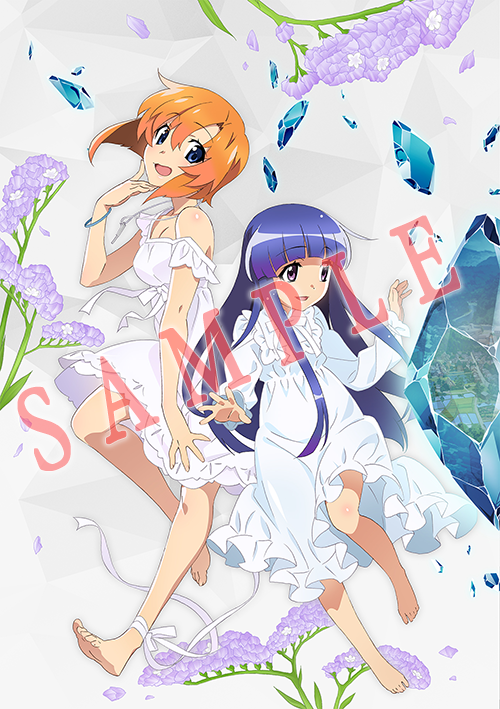


External Links
Videos
| Anime Arcs | ||
|---|---|---|
| 'Higurashi no Naku Koro ni' || align="center" style="font-size:90%; border-right: 3px solid #ea9a29;" | Onikakushi-hen • Watanagashi-hen • Tatarigoroshi-hen • Himatsubushi-hen Meakashi-hen • Tsumihoroboshi-hen • Nekogoroshi-hen | ||
| 'Higurashi no Naku ni Kai' || align="center" style="font-size:90%; border-right: 3px solid #ea9a29;" | Yakusamashi-hen • Minagoroshi-hen • Matsuribayashi-hen | ||
| 'Higurashi no Naku ni Rei' || align="center" style="font-size:90%; border-right: 3px solid #ea9a29;" | Hajisarashi-hen • Saikoroshi-hen • Hirukowashi-hen | ||
| 'Higurashi no Naku ni Kira' || align="center" style="font-size:90%; border-right: 3px solid #ea9a29;" | Batsukoishi-hen • Ayakashisenshi-hen • Musubienishi-hen • Yumeutsushi-hen | ||
| 'Higurashi no Naku Koro ni Kaku' || align="center" style="font-size:90%; border-right: 3px solid #ea9a29;" | Higurashi Outbreak | ||
| 'Higurashi no Naku Koro ni Gō' || align="center" style="font-size:90%; border-right: 3px solid #ea9a29;" | Onidamashi-hen • Watadamashi-hen • Tataridamashi-hen • Nekodamashi-hen • Satokowashi-hen | ||
| 'Higurashi no Naku Koro ni Sotsu' || align="center" style="font-size:90%; border-right: 3px solid #ea9a29;" | Oniakashi-hen • Wataakashi-hen • Tatariakashi-hen • Kagurashi-hen | ||
de:Higurashi no Naku Koro ni Gou pt-br:Higurashi no Naku Koro ni Gou